
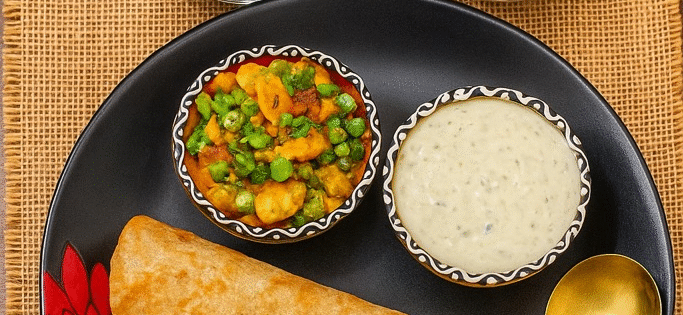
Navratri fasting is a beautiful reminder of how food can be simple, wholesome, and yet deeply satisfying. This 2 millets dosa combines sorghum (jowar) and barnyard millet (samak)—two gluten-free grains that are light on the stomach, rich in minerals, and perfect for vrat-friendly meals. With just a little curd and fresh curry leaves, the batter transforms into crisp, golden dosas that are both nourishing and delicious.
To elevate the experience, I’ve added a comforting peas and potato stuffing and paired it with a creamy coconut–makhana chutney. The result? A festive meal that feels indulgent yet aligns perfectly with the spirit of sattvik cooking.
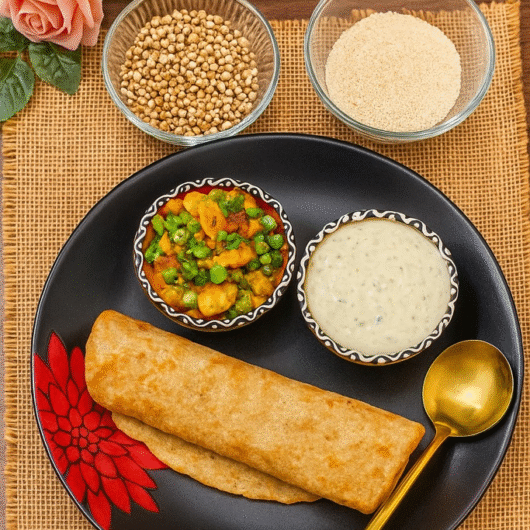
Why This Dish Works So Well
- Balanced & wholesome: The dosa gives you fiber and minerals, while peas and potatoes add body and flavor.
- Unique chutney twist: The makhana makes the chutney creamy and protein-rich while coconut adds freshness.
- Perfectly versatile: While designed for fasting, this dosa easily doubles up as a healthy breakfast or light dinner on regular days.
Health Highlights
- Sorghum (Jowar): Rich in fiber, supports digestion, and helps keep you fuller for longer.
- Barnyard Millet (Samak): An iron-rich millet, light on digestion, and considered one of the best vrat grains.
- Makhana: High in protein, calcium, and antioxidants, giving the chutney a nourishing boost.
2 Millet Dosa with Peas-Potato Stuffing & Coconut–Makhana Chutney

Ingredients
For the Dosa Batter:
- 1 cup sorghum millet jowar
- 1 cup barnyard millet samak
- ½ cup curd dahi
- 2 green chilies
- 1 small piece ginger optional, skip for Jain version
- 6–8 curry leaves
- Rock salt sendha namak to taste
- Water as needed
For the Stuffing (Peas & Potato)
- 2 medium potatoes – boiled & mashed
- ½ cup green peas – boiled & lightly crushed
- 1 tsp ghee or oil
- 1 tsp mustard seeds
- 1–2 green chilies chopped
- Few curry leaves
- Rock salt or kosher salt to taste
- Pinch of black pepper powder optional
For Coconut & Makhana Chutney:
- 1 cup grated coconut fresh or desiccated
- ½ cup roasted makhana
- 2 green chilies
- ½ cup curd
- Rock salt to taste
For tempering on chutney (optional)
- ½ tsp ghee or peanut oil
- ¼ tsp mustard seeds
- Few curry leaves
Instructions
Step 1: Prepare the Dosa Batter
- Wash and soak sorghum and barnyard millet for 6 hours or overnight.
- Drain and grind with curd, green chilies, ginger, curry leaves, and little water to make a smooth batter.
- Add rock salt and let it rest for 3–4 hours for light fermentation.
Step 2: Make the Stuffing
- Heat ghee/oil in a pan, add mustard seeds and let them crackle.
- Add green chilies and curry leaves.
- Mix in peas and potatoes, season with rock salt and black pepper.
- Cook for 2–3 minutes and keep aside.
Step 3: Make the Chutney
- Grind coconut, roasted makhana, green chilies, curd, and salt into a smooth chutney.
- (Optional) Heat ghee/oil, splutter mustard seeds and curry leaves, then pour over the chutney.
Step 4: Cook the Dosa
- Heat a dosa tawa and lightly grease it.
- Spread a ladle of batter into a slightly thick dosa.
- Drizzle some ghee/oil and cook till crisp.
- Place 2–3 spoons of stuffing inside, fold, and serve hot.
Serving Suggestion
Serve the dosa hot and crisp, stuffed with the peas–potato filling, alongside a generous bowl of coconut–makhana chutney. You can also drizzle a little ghee on top for added richness. This combination makes a complete sattvik meal—light enough for fasting days yet hearty enough to enjoy as a weekend breakfast or dinner.