There are some traditional recipes that are much more than just food. They carry memories, customs, and generations of wisdom with them. Dhanagra is one such traditional drink, especially enjoyed when breaking a fast.
Made with chuaras (dried dates), dry ginger, black pepper, almonds and a touch of ghee, Dhanagra is warm, aromatic and deeply comforting. It is traditionally enjoyed after fasting and makes a nourishing way to ease back into eating.
For many Jain families, drinks and foods prepared during Paryushan and Daslakshani fasting periods are closely connected with tradition and family practices. Dhanagra is one of those preparations that has been enjoyed for generations as a warm drink to have when breaking a fast.
What I particularly love about Dhanagra is how simple the ingredients are, yet the final drink has such a rich and beautiful flavor. As the chuaras, dry ginger and black pepper simmer together, the water takes on a lovely brownish-red color and a wonderful aroma.
What is Dhanagra?
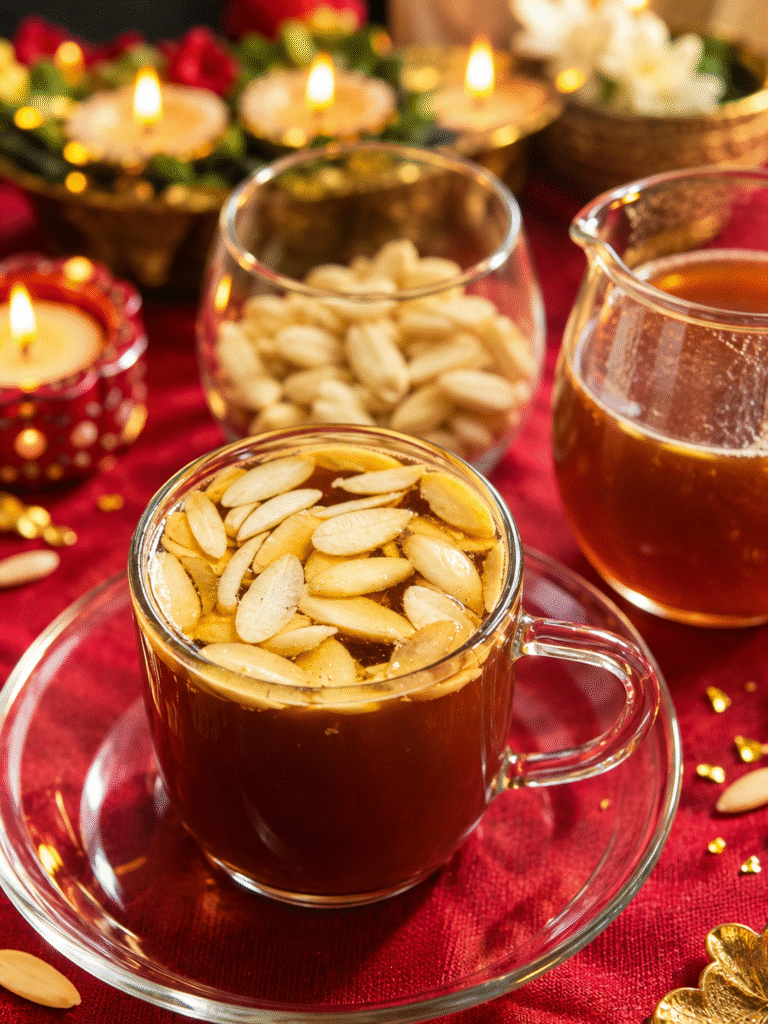
Dhanagra is a traditional warm drink prepared by simmering dried dates, dry ginger and black pepper in water until the liquid reduces and becomes concentrated. Sugar and a small tempering of clove-infused ghee are added towards the end, and the drink is served hot with soaked, peeled almonds.
The dates give it natural richness, the dry ginger and black pepper add warmth and spice, while the almonds provide a lovely texture and richness.
Some people also like adding a little warm milk while serving, which makes the drink even creamier and more comforting.
Why Dhanagra is Traditionally Enjoyed After Fasting
After a period of fasting, many traditional food practices focus on keeping the first meal or drink simple, warm and nourishing.
Dhanagra fits beautifully into this tradition. It is warm and comforting, and the combination of dates and almonds makes it satisfying without being an elaborate preparation.
During Paryushan and Daslakshani, when many people observe different forms of fasting and dietary restrictions, traditional preparations like Dhanagra become particularly meaningful. Of course, fasting practices vary from person to person and family to family, so it is best prepared according to your own fasting traditions.
The Secret to a Good Dhanagra
The key is slow reduction.
Don’t rush the first stage. Let the chuaras, dry ginger and black pepper simmer until the water reduces to roughly half. This allows the flavors and aroma to become concentrated.
The little tempering of ghee and cloves at the end may seem like a small step, but it makes a big difference. Once poured into the hot drink, it gives Dhanagra its characteristic rich aroma.
And don’t skip the almonds! Soaked, peeled almonds add a lovely contrast to the warm, spiced drink.
How to Serve Dhanagra
Strain the hot Dhanagra into cups and generously top it with soaked and peeled almonds. You can keep the almonds whole or finely chop them.
I personally love serving it hot, especially in the morning after a fast.
If you prefer a richer version, add a little warm milk just before serving.
A Traditional Recipe Worth Preserving
In today’s kitchens, we often look for new and exciting recipes, but I also believe there is something special about keeping traditional recipes alive.
Dhanagra is a beautiful example of how a handful of humble ingredients can come together to create something comforting, aromatic and deeply connected to our food traditions.
Especially during Paryushan and Daslakshani, recipes like these remind us that traditional food is not just about what we eat—it is also about the memories, customs and practices that we pass from one generation to the next.
Dhanagra

Ingredients
- 2 liters water
- 10–15 pitted chuaras dried dates
- 2 pieces whole dry ginger saunth, about 2–3 inches each
- 2 tablespoons whole black peppercorns
- ½ cup sugar
- 1 teaspoon ghee
- 2–3 cloves
- 1 handful soaked almonds peeled
Instructions
- In a deep cooking pot, add 2 liters of water.
- Add the pitted chuaras.
- Lightly crush the dry ginger and add it to the pot.
- Add the whole black peppercorns.
- Bring everything to a boil and then simmer until the water reduces to approximately half its original quantity.
- Add the sugar and continue boiling for another 2 minutes, stirring occasionally.
- The drink will develop a beautiful brownish-red color and a rich aroma.
- In a small tempering pan, heat 1 teaspoon ghee and add the cloves. Let them crackle.
- Pour the clove-infused ghee into the simmering Dhanagra and mix well.
- Turn off the heat and allow it to rest for a few minutes.
- Strain the hot Dhanagra into serving cups.
- Garnish generously with soaked, peeled almonds and serve warm.
Chef’s Note
Dhanagra is a traditional preparation associated with breaking a fast, particularly during religious fasting periods such as Paryushan and Daslakshani. Fasting practices differ across individuals and families, so the recipe can be adapted according to your own traditions.
For an even richer version, add a little warm milk to the prepared drink just before serving.
Serve it hot with plenty of soaked almonds for the best flavor and texture.